Lithops Mixed Species – Living Stones – Approx. 15 Seeds
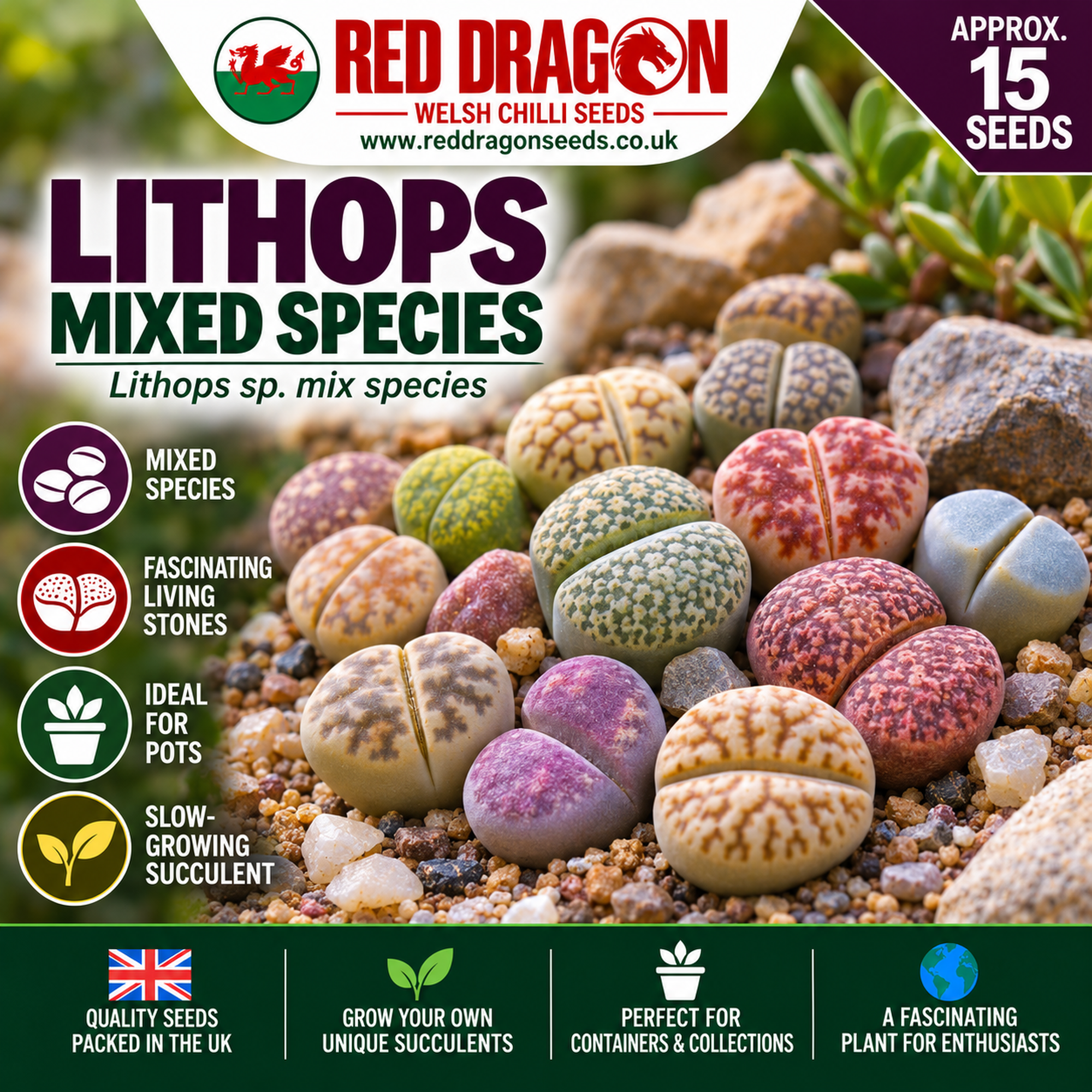
Discover the remarkable world of Lithops Mixed Species, commonly known as Living Stones. These fascinating succulents originate from the dry, rocky landscapes of southern Africa, where their compact, pebble-like appearance helps them blend into the surrounding ground.
Each Lithops consists mainly of two thick, fleshy leaves divided by a central fissure. Viewed from above, their patterned surfaces can resemble miniature stones in shades of grey, green, tan, pinkish brown and reddish purple. The precise assortment, colours and patterns will vary between seedlings, making a mixed-species packet particularly interesting to grow.
Miniature Succulents with Extraordinary Detail
Unlike conventional leafy houseplants, Lithops remain remarkably small and develop very slowly. They are well suited to small pots, succulent displays and specialist collections. Given suitable conditions and enough maturity, some plants produce delicate daisy-like flowers, usually white or yellow, from the split between their leaves. Flowering often takes several years from seed.
Grow Your Own Living Stones
Starting Lithops from seed is a rewarding project for patient growers. Their tiny seeds should be surface-sown on a fine, gritty, free-draining mix and kept gently moist for germination. Seedlings need more consistent moisture than mature plants, which have a specialised seasonal watering cycle.
Once established, provide excellent drainage, plenty of light and protection from frost. Mature plants are particularly sensitive to overwatering during winter and when their old leaf pairs are being replaced.
Botanical name: Lithops spp. (mixed species)
Common names: Living Stones, Pebble Plants
Packet contents: Approx. 15 Seeds.
How to Grow Lithops Mixed Species from Seed in the UK
When to Sow
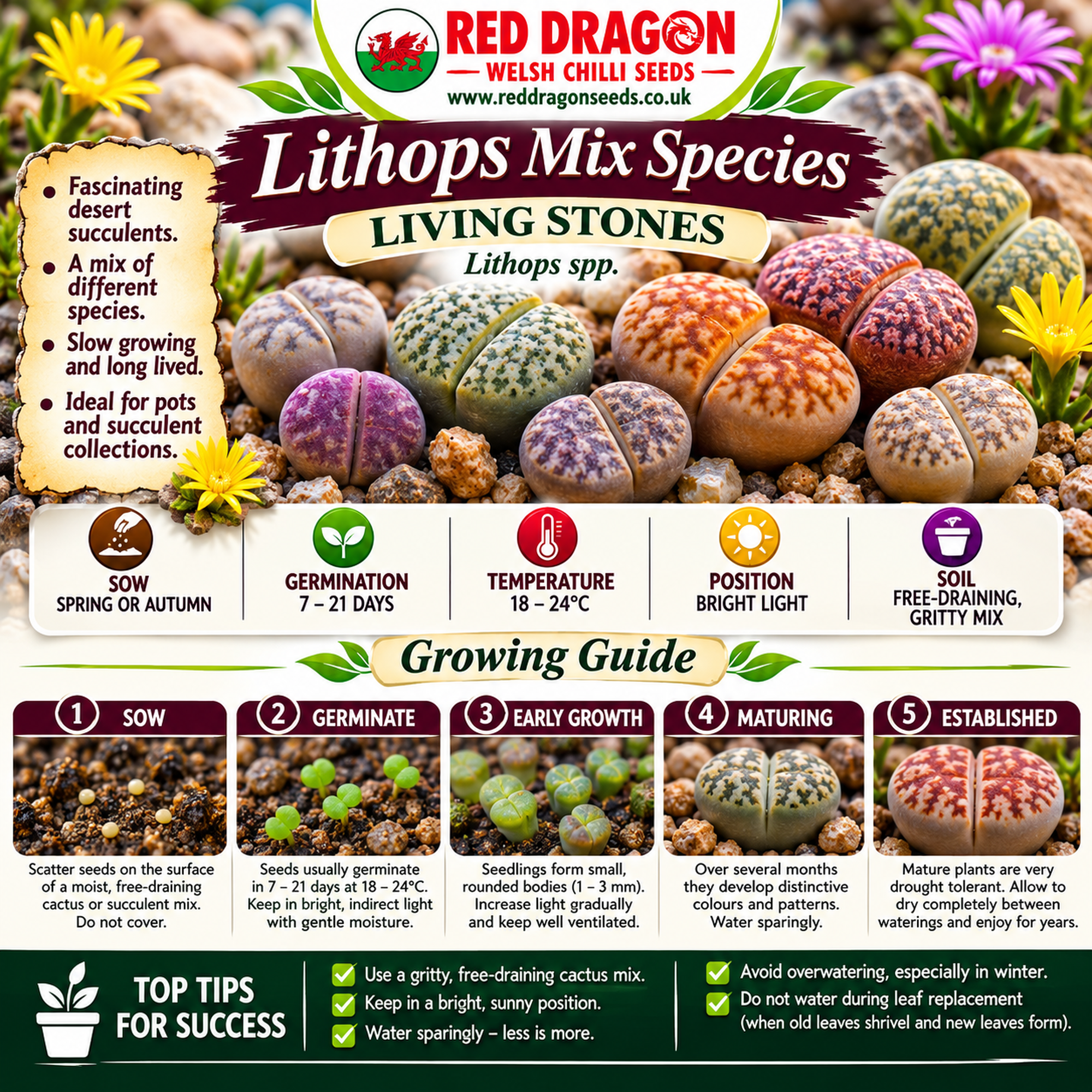
Sow indoors in spring, ideally March to May, when steady warmth and good light are easier to provide. With suitable controlled conditions, other sowing times are possible. These are very small, slow-growing succulents, so patience is essential.
Compost and Containers
Use shallow trays or small pots with plenty of drainage holes. Fill with a fine-textured but sharply free-draining cactus or succulent seed mix containing horticultural grit, pumice or perlite. Moisten the compost before sowing and allow any excess water to drain. Avoid dense, water-retentive compost.
How to Sow
The seeds are extremely tiny. Scatter them thinly over the compost surface; mixing them with a little fine, dry sand can make distribution easier. Press into contact with the surface, but do not bury deeply. At most, dust with a very fine layer of clean sand. Cover loosely with a transparent lid or bag to retain humidity during germination, and keep out of harsh direct sunlight.
Germination
Aim for approximately 19–24°C and bright, indirect light. Keep the sowing surface evenly moist but not saturated. Seeds may begin germinating within 1–3 weeks, although a mixed batch may take 2–12 weeks or longer to finish. Once seedlings appear, increase ventilation gradually to discourage damping off.
Caring for Young Seedlings
Tiny seedlings need more frequent, gentle moisture than mature Lithops. Water carefully from below or with a fine mist so seeds and seedlings are not washed away. As plants establish, increase airflow and light gradually, letting the compost become slightly drier between waterings. Never leave pots standing in water.
Potting On
Grow seedlings on slowly in their original tray until they are sturdy enough to handle. Transplant carefully into small pots of very free-draining, mineral-rich succulent compost. Disturb the fine roots as little as possible.
Light and Temperature
Established Lithops enjoy bright light and may take direct sunshine once acclimatised, but young plants need protection from scorching midday sun. A bright UK windowsill, conservatory or frost-free greenhouse is suitable. Protect from frost and give good ventilation.
Seasonal Watering – Important
Never follow a fixed weekly watering schedule for established plants. During active growth, water thoroughly but infrequently, allowing the mix to dry between waterings. Many Lithops grow and may flower in late summer or autumn. Through winter and while a new leaf pair absorbs the old leaves, keep mature plants virtually dry. Resume careful watering only after the old pair has largely dried away. Adjust to the species, growing environment and visible leaf cycle. Seedlings have different moisture needs and should not be subjected to the same prolonged dry treatment as mature plants.
Flowering and Long-Term Care
Mature plants may flower in autumn, often with white or yellow daisy-like blooms. Flowering can take three years or more from seed. These plants are naturally slow-growing; avoid overfeeding and keep their roots in a well-drained medium. Watch for mealybugs and signs of rot caused by excessive moisture.









Reviews
There are no reviews yet.